
Hershey movie true story: the Titanic ticket, the bankruptcies and the $60 million secret
Is Hershey a true story? Mostly. We check the film against the archives: the failures, Kitty's illness, the Titanic booking and the scenes that were invented.
Our verdict: Mostly true

In December 1911 Milton Hershey wrote a check for $300 to the White Star Line. It was the deposit on a first-class stateroom for the maiden voyage of the Titanic. He never boarded. Business called him home early, he took a German liner instead, and the man who put a five-cent chocolate bar in America’s pocket lived another thirty-three years.
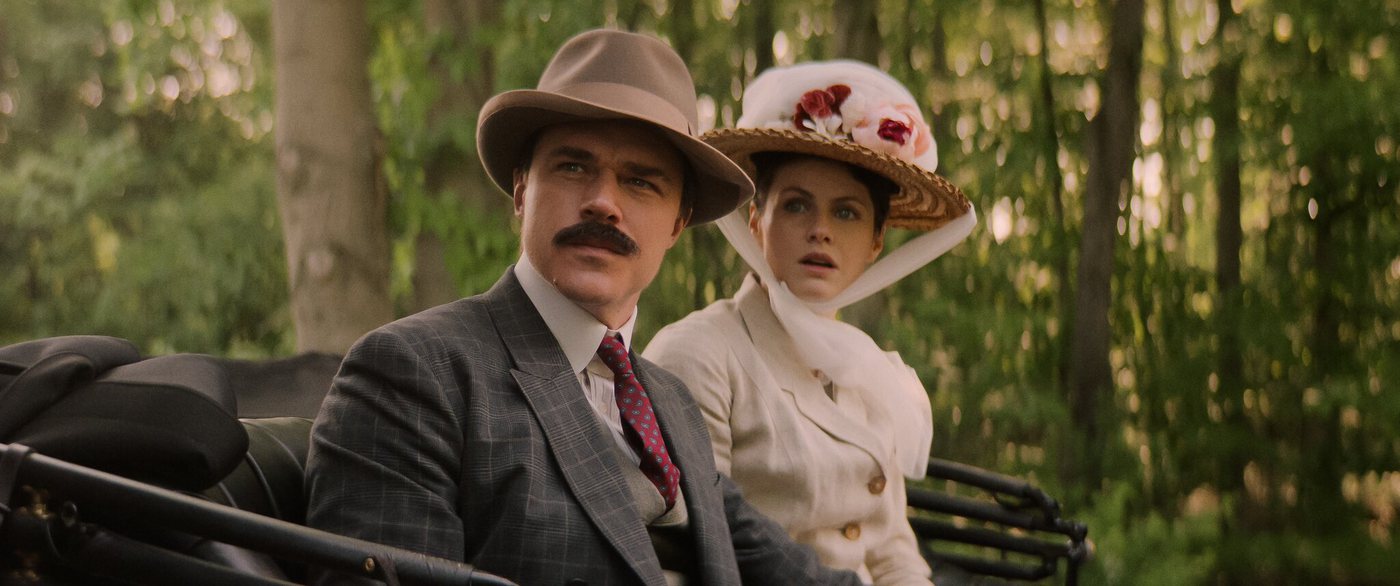
That check still exists. It is one of several moments in Hershey, the new film starring Finn Wittrock and Alexandra Daddario, that sound invented and are not. Others sound true and are not. The film opened in American cinemas on November 25, and the question most people are asking is the obvious one: how much of it really happened?
We have checked the film’s main story points against the published record, chiefly the Hershey Community Archives, which holds Milton Hershey’s papers. The short answer is that the outline is sound, and several of the most cinematic scenes are made up.
Hershey at a glance
- Released
- November 25, 2026 in US and Canadian cinemas, from Angel Studios
- Director
- Mark Waters (Mean Girls, Freaky Friday)
- Stars
- Finn Wittrock, Alexandra Daddario, Alan Ruck, Richard Kind, David Costabile, Heléne Yorke
- Set in
- Pennsylvania, from the early 1870s to the late 1910s
- Rated
- PG. Runs about 1 hour 50 minutes
- Streaming
- No date announced yet
Is Hershey a true story?
Yes, in outline. Milton Snavely Hershey was born on September 13, 1857 in rural Derry Township, Pennsylvania, into a Mennonite farming community. His father, Henry, chased one scheme after another and eventually left. His mother, Fanny, raised him. The family moved so often that Milton attended at least seven schools and never got beyond what would now be the fourth grade.
The film covers nearly fifty years, from that childhood to the late 1910s. According to the archives’ own comparison of film and record, the major milestones are all where they should be: the apprenticeships, the bankruptcies, the caramel fortune, the gamble on chocolate, the marriage and the school. Archivists and museum curators read the script, lent photographs and letters, and let the designers measure and scan objects from the collection.
One caution. The Hershey Company is among the film’s producers, and has said its representatives reviewed scripts and creative choices. The historians who vouch for its accuracy work for Hershey institutions. That does not make them wrong, and they are candid about what was invented, but it is worth knowing who is marking the homework.
The failures were real
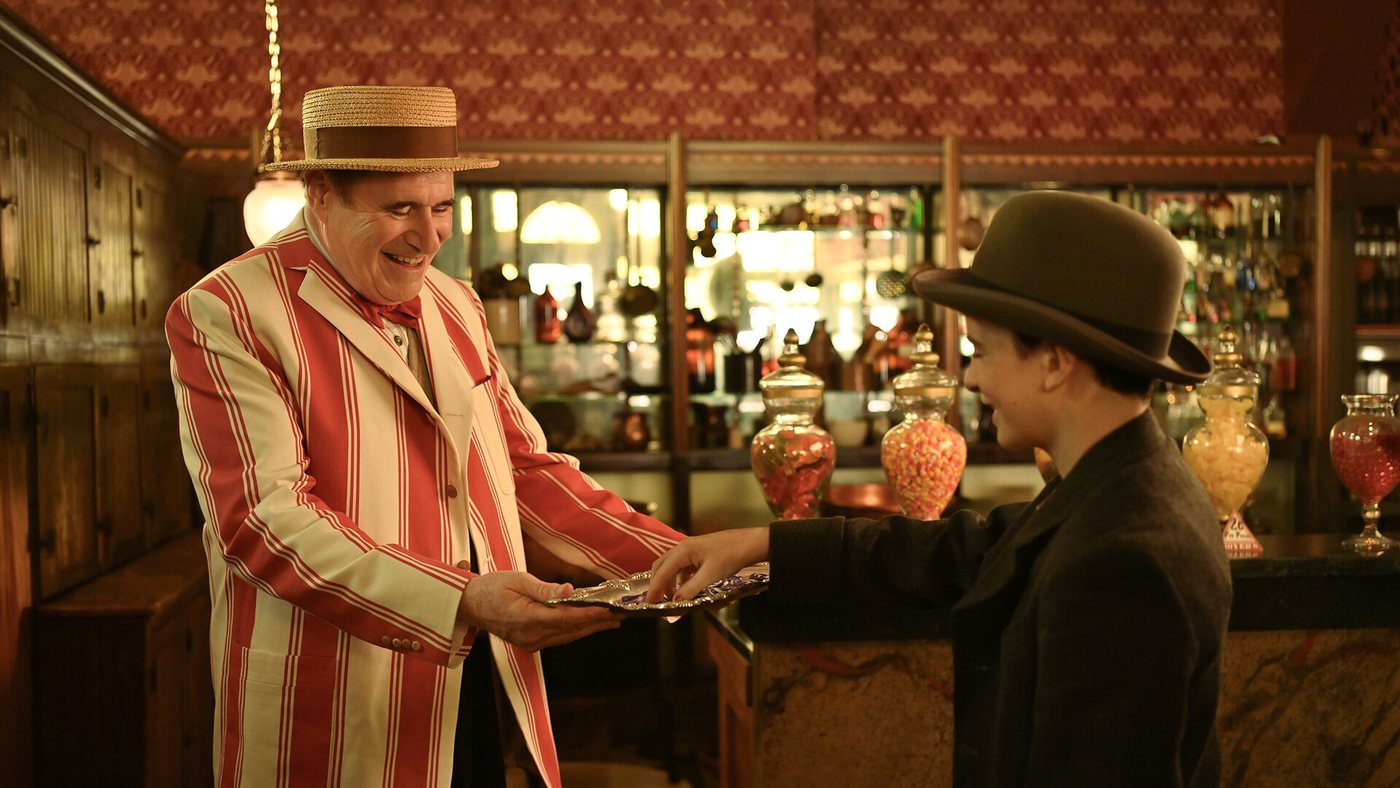
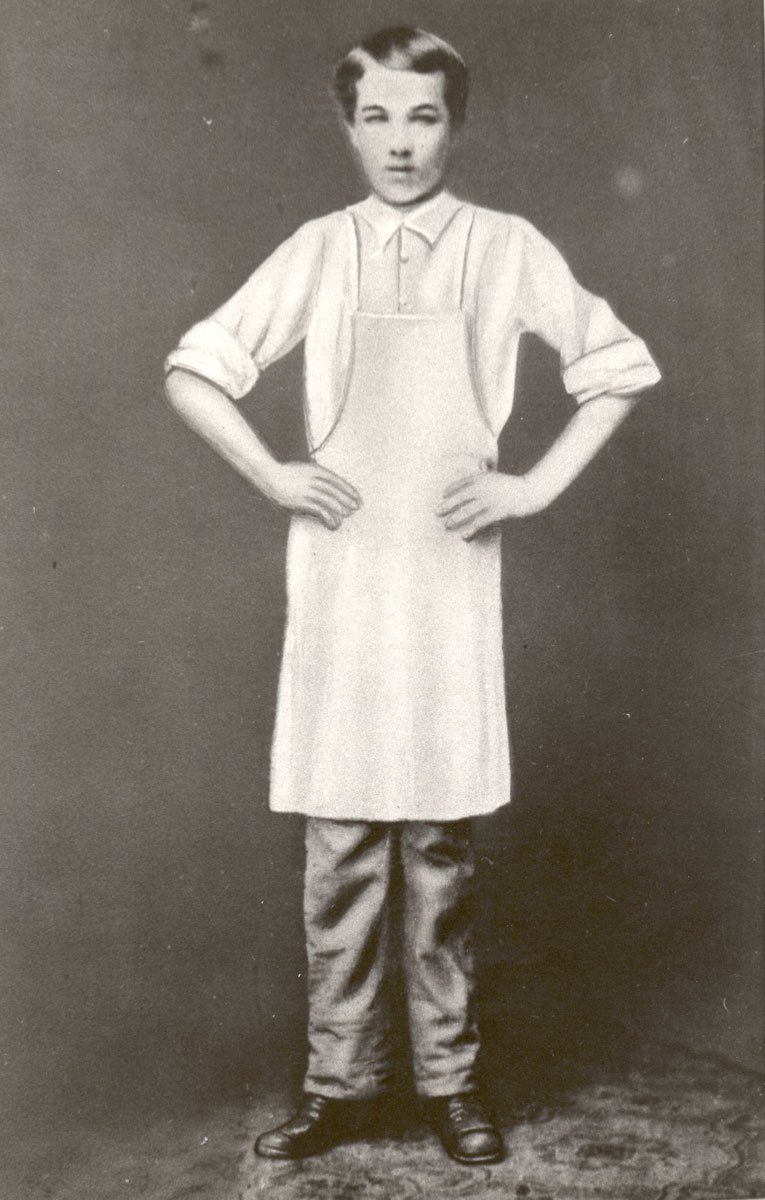
At thirteen Milton was apprenticed to a printer in Lancaster, and did not last. At fourteen he started again with Joseph Royer, who ran an ice cream parlor and confectionery on West King Street, and stayed four years. In the film Royer is played by Richard Kind, and his shop is really Klavon’s, a century-old ice cream parlor in Pittsburgh.
In 1876, still in his teens, Milton opened his own sweet shop in Philadelphia, hoping to catch the crowds at the centennial celebrations. It lasted six years and ended in bankruptcy. He then worked his way through Denver, Chicago, New Orleans and New York, where a second business failed. What he brought home from Denver was a recipe: caramels made with fresh milk.
Back in Lancaster in 1886 he founded the Lancaster Caramel Company, and this time it worked. Within a few years he was selling across the country and abroad. The film shows all of this, and adds one thing that never happened: a spell working at a brickworks.
The rival who never existed
At the World’s Columbian Exposition in Chicago in 1893, Hershey saw German chocolate-making machinery at work and decided that chocolate, not caramel, was the future. In 1894 he set up the Hershey Chocolate Company as a sideline to the caramel business. In 1900 he sold the caramel company for $1 million, kept the chocolate, and before the year was out had sold the first Hershey’s milk chocolate bars, at five cents each.
All of that is in the film, and all of it is true. What is not true is Tobias Thornhill, the rival candymaker played by David Costabile. He is a composite, created to give the sale of the caramel company a villain. The real buyer was the American Caramel Company, and the price shown on screen is the real one.
Hershey did not invent milk chocolate, incidentally. The Swiss had been making it since the 1870s. What he worked out, after years of experiments, was how to make it with fresh milk, in bulk, cheaply enough for anyone to buy.
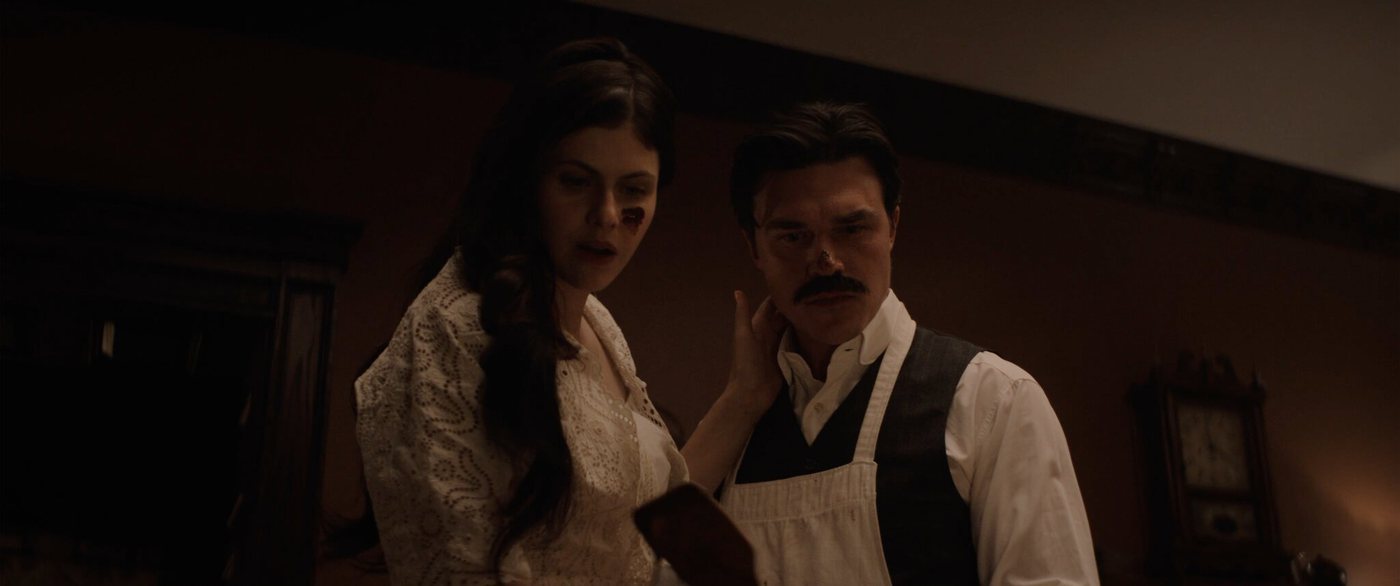
Kitty, and the proposal nobody recorded
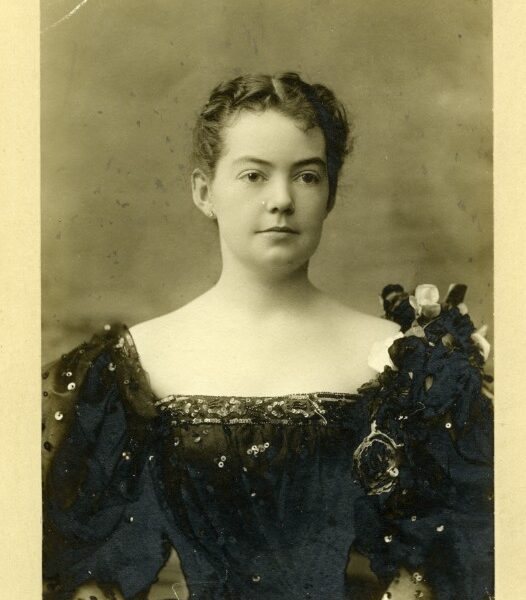
Catherine Sweeney, known as Kitty, was born in Jamestown, New York, in 1871, the daughter of Irish immigrants. Milton met her there in 1897, at a confectioner’s where he had come to sell caramels. He was forty and a settled bachelor. She was twenty-six. They married on May 25, 1898, in the rectory of St Patrick’s Cathedral in New York.
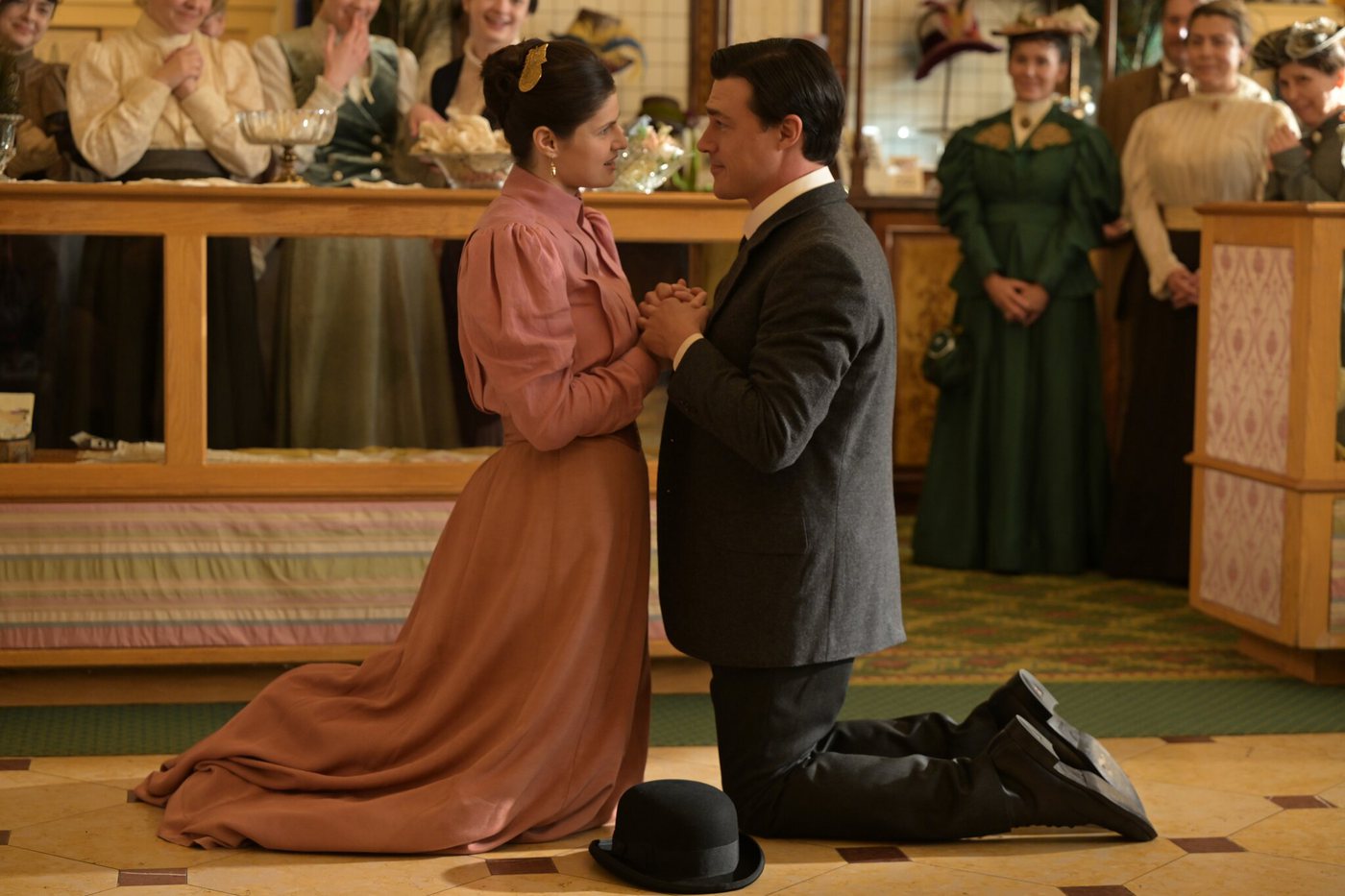
That much is documented. How he proposed is not. Nobody knows where it happened, what he said or whether there was a ring. The film’s version, with both of them on their knees in a shop full of delighted onlookers, was written for the screen, and the archivists say so plainly.
What the record does show is a happy marriage. Milton had been raised to think flowers frivolous. He brought Kitty some every day.
What happened to Kitty Hershey?
Kitty suffered for years from an illness that was never fully diagnosed. The archives describe it as progressive and neurological: it took her balance and then her mobility. The couple spent long stretches in Europe looking for treatment, or at least relief.
In March 1915, on her way home from Atlantic City, she caught pneumonia and was taken to a hotel in Philadelphia. Milton was sent for and came at once. She died on March 25, aged forty-three. He was fifty-seven. He never remarried, and he outlived her by thirty years.
The film makes her illness its turning point, and here it is on firm ground.
Did Milton Hershey really have a ticket for the Titanic?
He had a booking. The canceled check, for $300 and dated December 18, 1911, is on display at The Hershey Story museum. It was most likely a ten per cent deposit on a first-class stateroom.
The Hersheys were spending the winter in Nice. Early in 1912 Milton decided he was needed at home sooner than the Titanic could get him there. He canceled and sailed on the German liner Amerika, landing in New York on April 6, four days before the Titanic left Southampton. Kitty stayed behind in Europe.
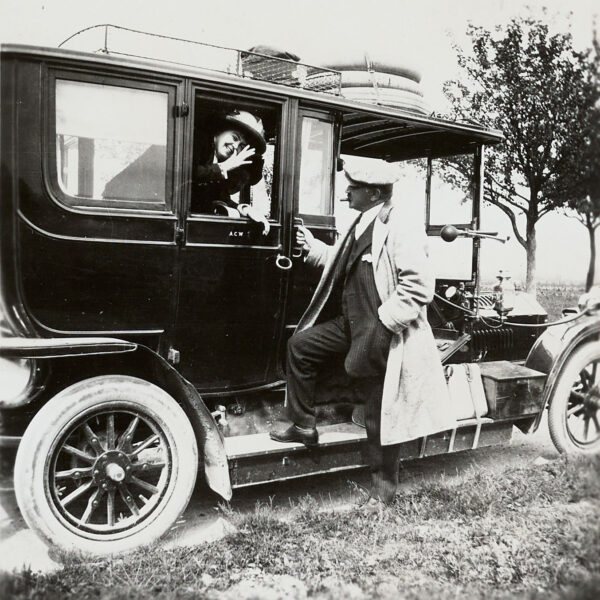
Here the film takes a liberty. It puts husband and wife on the Amerika together and has them learn of the sinking at sea. In reality Milton had been back in Pennsylvania for a week when the news came. One detail the screenwriters did not need to invent: the following week the Amerika was one of the ships that radioed a warning of icebergs close to the Titanic’s course.
The school was Kitty’s idea, and that part is true
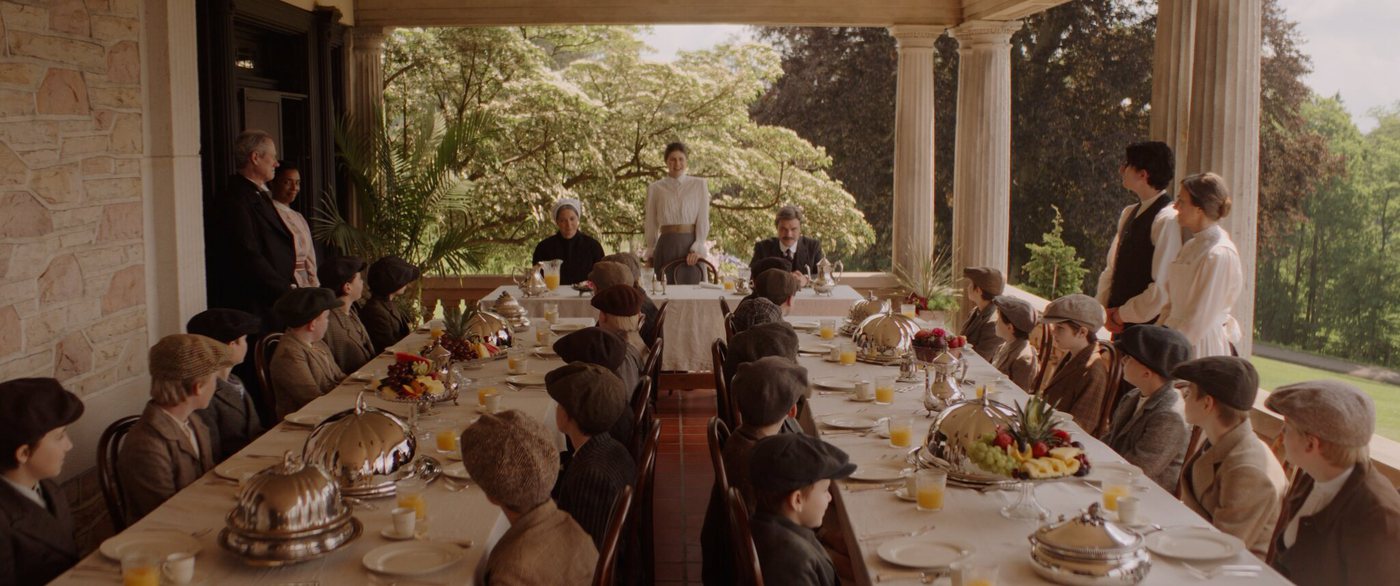
Milton and Kitty could not have children. On November 15, 1909 they both signed a deed of trust founding the Hershey Industrial School, a home and school for orphan boys. It was unusual then for a wife to sign such a document. Kitty had volunteered with a Lancaster charity that helped poor families, and she had firm views: the deed says, at her insistence, that the children were not to be put in uniforms. Asked later where the school had come from, Milton had a stock answer: “It was Kitty’s idea.”
Three years after she died, on November 13, 1918, he transferred 5,000 shares in the Hershey Chocolate Company, the bulk of his fortune, to the school’s trust. He told almost nobody. The gift became public only in November 1923, when the New York Times reported it under a headline figure of $60 million.
The school is still there, now called Milton Hershey School. It has more than 2,200 pupils and charges no fees, and its endowment was valued at more than $17 billion in 2021.
The film changes the order of one thing. It shows Milton buying land in Cuba for a sugar mill while Kitty is alive. He first went there in 1916, the year after her death.
What the film leaves out
The story stops in the late 1910s, so it never reaches 1937, when a sit-down strike at the Hershey factory was broken up by force. Nor does it spend long on the other side of the model town. The archives’ own judgment is that Hershey’s concern for his workers was genuine, and that he could also be autocratic, deciding what was good for the town without asking it.
Critics have been unkind. As we write, fewer than one in five of the reviews collected by Rotten Tomatoes is positive, and the Hollywood Reporter’s critic described the film as, in effect, a feature-length advertisement for the company. Audiences disagree: the verified audience score on the same site is above ninety per cent.
How Hershey was made
Mark Waters, best known for Mean Girls and Freaky Friday, shot the film over seven weeks in May and June 2025. Most of it was made in and around Pittsburgh, some 200 miles west of the real Hershey. Bedford Square on the city’s South Side became a nineteenth-century street. In Ligonier the town square was dressed with a vintage drugstore, a photographer’s studio and a milliner’s. Waters has said the towns let his crew take down parking signs and spread dirt over the roads.
The production’s own figures give a sense of the scale:
- 17 locations across Pennsylvania, including Hershey itself
- 74 sets
- more than 1,500 extras
- more than 2,300 costumes, 54 of them made for Kitty
- thousands of pieces of real chocolate, for the look and the smell
Alexandra Daddario met pupils from Milton Hershey School on her first day of filming, and former pupils now more than a hundred years old visited the set. Rolfe Kent’s score, his tenth for Waters, was recorded with a full orchestra in Nashville.
The premiere in Hershey
The red-carpet premiere was held on November 17 at the Hershey Theatre, which Milton Hershey built in the 1930s. The carpet was in fact blue. About 2,000 people came, many of them in 1900s dress. Two days earlier the pupils of Milton Hershey School had been given a first look.
A year-long exhibition at The Hershey Story museum nearby shows costumes and props from the film, with a recreation of Royer’s shop.
Where to watch Hershey
Hershey is in cinemas in the United States and Canada now. Angel Studios says international release dates will be announced later, and no streaming date has been given. We will update this page when either changes. The trailer is below.
If this is your kind of story
For more American fortunes from the same decades, The Gilded Age covers New York in the 1880s. Britain gets its own chocolate dynasty next year in The Cadburys. And the ship Milton Hershey missed is the subject of Titanic. Everything else we list from these years is in our Victorian and Gilded Age guide and our Edwardian guide, and the month’s other new trailers are in our November round-up.
Sources: Hershey Community Archives (the Titanic check, Catherine Hershey, the 1918 gift); Milton Hershey School history pages; The Hershey Company's comparison of film and record, published November 16, 2026; Angel Studios' press room and production notes; LNP | LancasterOnline, WITF, TribLive and KDKA for the shoot and the premiere. Review scores were checked on November 27, 2026. We have not yet seen the film ourselves: our account of what it shows comes from the archives' published comparison and the studio's own notes.
The claims, checked
- ✓ True
Milton Hershey failed in business, more than once, before he made his fortune.
His first sweet shop, opened in Philadelphia in 1876, went bankrupt after six years. A later business in New York failed as well. Success came only with the Lancaster Caramel Company, founded in 1886.
- ✓ True
He learned the trade as a teenage apprentice to the confectioner Joseph Royer.
Hershey spent four years with Royer in Lancaster, from the age of fourteen, after a short and unhappy spell as a printer's apprentice. The film also gives him a job at a brickworks, which he never had.
- ✗ Invented
A rival candymaker called Tobias Thornhill stood in his way.
Thornhill, played by David Costabile, is a composite character invented for the film. The sale of the caramel business in 1900, for $1 million, is real. The buyer was the American Caramel Company.
- ≈ Partly
Milton proposed to Kitty on his knees, in front of a shop full of people.
They did meet at a confectioner's in Jamestown, New York, in 1897 and married in May 1898. But no record survives of how, where or even whether he formally proposed. The scene was written for the film.
- ≈ Partly
The Hersheys were booked to sail on the Titanic.
Milton's $300 deposit check to the White Star Line survives. He canceled and sailed earlier on the liner Amerika. The film puts Kitty on that ship with him and has them hear of the sinking at sea. In fact she stayed in Europe, and he had been home for a week.
- ✓ True
Kitty fell seriously ill, and it changed what the couple did with their money.
She suffered for years from a progressive neurological illness that was never fully diagnosed, and died in 1915 at forty-three. The school the couple founded in 1909 was, by Milton's own account, her idea.
- ✗ Invented
Milton built his sugar operation in Cuba while Kitty was alive.
He first went to Cuba in 1916, the year after she died. The Cuban mill and town were real, but the film moves them earlier.
- ✓ True
Milton Hershey gave his fortune away to a school for children.
On November 13, 1918 he transferred 5,000 shares, the bulk of his wealth, to the trust of the Hershey Industrial School. He kept it quiet for five years.